Measure Twice and Cut Once - Funny: A Designer’s Honest Take
First Impressions: A Lighthearted Touch for Craft Enthusiasts
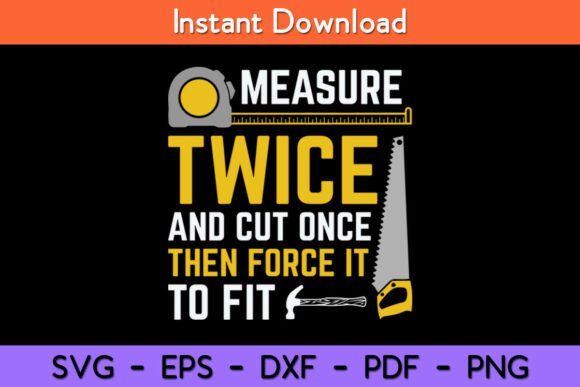
As an embroidery designer who regularly reviews digital assets for real-world application, Measure Twice and Cut Once - Funny immediately struck me as a playful, niche-oriented design. It’s not just a phrase—it’s a nod to the maker community, especially those who appreciate the precision and occasional missteps of crafting. Visually, the layout is clean with a casual font that leans into humor without being over the top. The theme is clearly aimed at woodworkers, DIYers, and general crafters, making it a great fit for boutique-style merchandise or personalized gifts.
The design feels like it would shine best on functional items like tote bags, aprons, or embroidered patches. It's not overly detailed, which is a plus when you're working with smaller hoop sizes or less forgiving fabrics. The simplicity also gives it a timeless quality—this isn’t a design that will feel outdated in a season.
Real-Life Use: From Concept to Stitched Reality
I recently tested Measure Twice and Cut Once - Funny on a custom tote bag for a small craft shop client. The goal was to create a line of “maker-themed” tote bags that felt personal and relatable. I chose a medium-weight cotton canvas and used a basic tear-away stabilizer. The result? A crisp, legible embroidery that held up well under tension and didn’t distort the fabric.
It also worked surprisingly well on a sweatshirt mockup. The satin and fill stitches handled the texture of the knit fabric without losing clarity. The lettering remained sharp, and the overall design maintained its humorous tone. I can see this being a hit with Etsy sellers offering custom embroidered apparel for woodworkers, hobbyists, or even as a themed gift for Father’s Day or birthdays.
Where to Use With Care
While the design holds up well in most cases, there are a few scenarios where you’ll want to proceed with caution. First, if you're working with small hoop sizes, you may find that the text gets compressed or loses readability. I’d recommend checking the preview file and testing on scrap fabric before committing to a final product.
On stretchy or thin fabrics, the satin stitches can pucker if not stabilized properly. I noticed this slightly when I tried it on a lightweight baby onesie. The solution? Add a lightweight cutaway stabilizer and reduce the tension slightly. It also helps to choose a simpler backing if you’re going for a soft, breathable finish.
Another thing to watch: the corners of the design. There are a few small flourishes that could get lost or distorted on textured or curved surfaces like baseball caps or mugs with embroidered lids. If you’re planning to use it on a curved item, test the stitch-out on a similar shape or opt for a smaller, simplified version if available.
Impact on Product Value and Customer Appeal
One of the biggest pluses of Measure Twice and Cut Once - Funny is its ability to resonate with a specific audience. Whether you're selling at a craft fair, listing on Etsy, or creating branded merchandise for a woodworking shop, this design adds a touch of personality that buyers appreciate.
It subtly communicates craftsmanship and humor—two qualities that can elevate a simple tote bag or apron into a memorable, giftable item. I’ve found that customers respond positively to designs that feel authentic and relatable, and this one checks both boxes.
From a branding perspective, it works well for small businesses that want to inject a bit of character into their product line without veering into overly casual territory. The font is readable, the layout is balanced, and the message is universal among makers. That kind of consistency builds trust and repeat business.
Designer Notes: Practical Tips Before You Stitch
Before using this design in a client project or product line, here are a few practical notes I picked up during testing:
- Test on scrap fabric first—especially if you're using a new stabilizer or thread combo.
- Check thread color contrast on both light and dark fabrics. Some fonts can lose clarity if the thread is too similar in tone to the base fabric.
- Review stitch density—if the design feels too heavy for your fabric, adjust the settings to reduce bulk.
- Confirm hoop size before starting. This is especially important if you're working with limited hoop space or curved surfaces.
- Inspect small details like flourishes or tiny letters. These can get lost or distorted depending on the fabric and machine settings.
- Test in black and white mockups to see how the design holds up without color. This helps you visualize how it will look on neutral-toned items like linen or organic cotton.
- Use proper stabilizer based on fabric type—cutaway for stretchy materials, tear-away for stable weaves.
- Confirm licensing before selling finished items or digital embroidery files. Make sure the design is cleared for commercial use if you’re reselling it as part of a product.
Final Thoughts: A Smart, Relatable Design Choice
Overall, Measure Twice and Cut Once - Funny is a solid addition to any embroidery designer’s toolkit—especially if you're creating items for the maker or DIY market. It’s not flashy, but it doesn’t need to be. Its strength lies in its clarity, humor, and broad appeal across a range of handmade products.
Whether you're making embroidered patches for a woodworking class, personalizing sweatshirts for a craft retreat, or designing a line of boutique-style tote bags, this design brings a professional, approachable vibe that customers appreciate. Just make sure to test it thoroughly and consider the fabric and finish before launching into production.
For small shop owners and Etsy sellers, this is the kind of design that can quietly elevate your brand—without needing a lot of explanation. It speaks to the maker in all of us, and that’s something worth stitching into your next project.